Monday, 8 April 2013

Homemade Butter

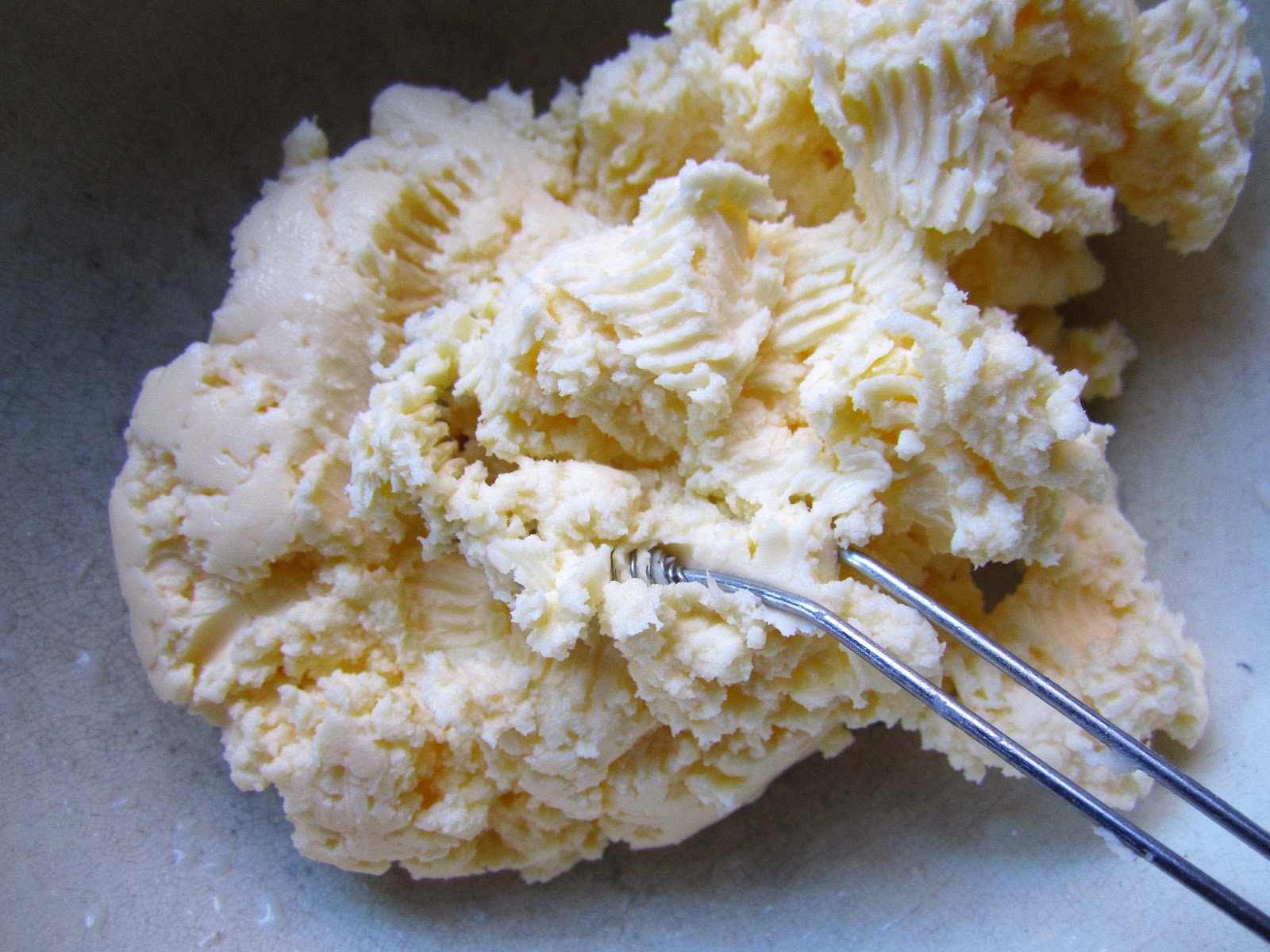
Butter! It suddenly occurred to me the other week sitting at my desk... Homemade butter! Why had it never occurred to me before? I set about looking up how to make your own butter; whisk some cream is the short answer... Sounds pretty easy. I'm going to make my own bloody butter. No sooner had I announced my intention on Twitter someone suggested I smoked it, my goodness, what a brilliant idea. I love butter, I love smoked stuff, happy days. So far I have only got as far as making the butter, I will smoke the next batch and keep you posted. I was just a bit too excited not to eat this lot straight away. There were hot crossed buns and fresh bread hanging around, realistically the butter wasn’t going to last long.


So on a sunny Good Friday morning I began my foray into the world of butter making. The arrival of the sun was as welcome as the butter. I am becoming so fed up with winter clothes and constantly being cold. It's still cold, but over Easter weekend we had lunch outside in the sunshine, up the coast in Newton, it was delightful! This never ending winter is finally showing some signs of coming to an end. I also dashed off to Lisbon for a few days last week to watch Newcastle lose a football match; but on the plus side I didn’t wear a coat or socks the whole time I was there! I loved Lisbon, so pretty and friendly, I'll post a few photos soon...

So some things I learnt before I began the butter; everything needs to be spotlessly clean; bowls, sieves, spoons etc... Start with your cream at room temperature as this will give you a head start, so leave it out of the fridge for up to 48 hours before you start. Look out for cream that has been reduced, bargain homemade butter is even better... It is a superstitious process historically, because things often went wrong, scattering primroses over the threshold and using a dead man’s hand to stir the churn were both recommended. Luckily this batch worked out well without flowers or dead people...


I Started with 600ml of thick double cream, it was on offer and I figured using a thick double cream would give me a little bit of a head start. In short you whip and whip until you get butter... I used a hand whisk and it probably took about 15 minutes and a bit of a sore arm, but is by no means unachievable. If you have an electric whisk then even better, you’re in for an easy time..

First the cream thickens and I couldn’t tell if I was imagining it turning slightly yellow or not. After it reaches a very thick stage little flecks start to form in it, this is butter. Keep beating it, it will turn grainy in appearance and finally you will find it sloshing around in a pool of buttermilk as it separates fully.


Place it all in a sieve with a bowl below, keeping the buttermilk, which you can drink or make a soda bread loaf from. I went with the latter, my own bread and butter, I was so proud! Return the butter to the bowl and beat it a bit more, and drain again. Then take a clean bowl full of very cold water and add the butter, squeezing it and washing it to remove any last buttermilk. I changed the water a few times, washing the butter until the water stayed clear. The buttermilk makes the butter go off much quicker, so you need to get it all out. Finally I added salt, you don’t have to, but it keeps much longer and I prefer it personally... Add ¼ of a teaspoon for every 110g of butter. From 600ml of cream I got 315g of butter, which I wrapped in little parcels of greaseproof paper and took on my trip up the coast.


It's so delicious, I made a soda bread loaf with the buttermilk, and it might have been my imagination but it was some of the best bread and butter ever, perhaps it was the sunshine and I was a bit giddy... It was so creamy and smooth and lovely, I cant wait to make it again. I will try cold smoking some, and perhaps flavour some with garlic, wild garlic or anchovies... Definitely one of my new favourite discoveries.


Tuesday, 2 April 2013

New Supperclub date!

'The Grazer's Distinctly British Feast'
19th April 2013 8pm - Midnight

SOLD OUT


What is this?

'The Grazer's Supperclub' a regular pop-up feast hosted by The Grazer at Ouse Street Arts Club. A night of feasting in a totally unique space, fire, food and booze...

What will we eat?

A three course Distinctly British feast, think table long smorgasbords full of potted meats and pickles, breads and homemade cheeses... Hearty chicken and veal pies, truffle mash and wild garlic liquor... a scattering of puddings, ginger and rhubarb, sponges and chocolate black pudding... The menu will be confirmed and sent out to you a couple of days before the event.

What will we drink?

There will be a special cocktail on arrival, inspired by the menu and setting. Following that this is a BYO affair. You will be sent the finalised menu prior to arrival so you can decide on your chosen tipple to bring.

Where is it?

Ouse Street Arts Club, a brand new creative space within Newcastle’s vibrant Ouseburn Valley. An interventional development with xsite architecture converting 2 ISO shipping containers to realise a unique and innovative social event space.

How much will it set me back?

You will be given an envelope at the end of the evening. We ask you to leave what you think your whole evenings experience has been worth, venue, food, drinks and service... How do you put a price on an evening of feasting in a shipping container, you decide... Please bring cash.

How do I book?

Just email me at annahedworth@hotmail.com to reserve your place, these events sell out very quickly so don't hang about... We will confirm back to you in writing asap if you have secured a place.

Thursday, 21 March 2013

Coconut, Lentil and Spinach Stew

I've been hen doo-ing in the Lake District, a beautiful house full of over excited girls in food fancy dress... My costume was a piece of streaky bacon, a giant one made of foam that made me laugh every time I looked in the mirror, until the early hours when I couldn’t really see in the mirror... There was a fried egg, a giant pea pod, a lobster, a pig (organic obvs) jelly beans, diet coke, a can of Spam, the list goes on... It made for a very entertaining evening fuelled by much wine and a big house to bash around in...  

I had an excellent time, although I still feel tired and a bit emotional, staying up till the early hours doesn't seem to agree with me as well as it used to. I need comfort food in quiet rooms with blankets and nice people....  


I found this recipe on The Traveller's Lunchbox blog originally, I think they adapted it from someone else and I changed it a bit from theirs, so it's origins have changed along the way, but I imagine it has been delicious in every form. They call it a soup, mine is more of a stewy dal type thing I think... A delicious spiced coconut stew full of lentils and soft spinach.


Start with the lentils, 275g of green or puy lentils, rinse them, then add to a pan with 1 litre of chicken stock, a big sprig of thyme and 1½ teaspoons of turmeric. Bring it to the boil and simmer gently with a lid on till the lentils are soft, about 20 minutes, add more stock if needs be...


While the lentils are cooking heat a big knob of butter in a frying pan and sauté 1 large diced onion with a big pinch of salt until it is very soft, for about 12 minutes. Then add 2 cloves of finely chopped garlic, ½ teaspoon of ground cardamom seeds, ¼ teaspoon ground cloves, ¼ teaspoon of ground cinnamon, a pinch of ground nutmeg and fry for another 30 seconds. Then scrape this spicy onion mix into the lentils.


Finally add a whole tin of coconut milk and a small bag of spinach, stirring till it wilts into the warm stew. Simmer for another 10 minutes or so and check if you need salt and pepper as it is cooking.

This will sort you out if you find yourself deep in winter at the end of March or a delicate hen do patient, both of which I am currently inflicted with...


Tuesday, 19 March 2013

Middle Eastern Supperclub by James Byrne

I have admired James Byrne's photography for quite a while now. I came across his blog by chance and have really enjoyed his photos of all things North East and culinary for some time. So when he emailed me to book a place on one of my supperclubs I was secretly pretty pleased; excited already to see his beautiful photos of my little dining event. He didn't disappoint either... You can see a few of the photos below, for the full post with more photos click here and for lots of other lovely photos see his blog Fish Chips and Mushy Peas.


Wednesday, 13 March 2013

Some thoughts on Pickling...

I've been experimenting with preserving food for a while now, salting, curing and pickling. I've found that when preserving your own food pickling is a good place to start, it's relatively easy, quick and cheap. I've dabbled with curing and salting, salami and fish, and have future plans for brasola and bacon.

Pickling embraces each of the seasons, but also defys them as it allows you to eat things all year long. Fresh sharp zingy young vegetables remain so delicious pickled and there is a pickle to suit nearly every meal, whether meat, fish or cheese... Fridges were a luxury as little ago as the 1950's so things had to be stored for future use in increasingly inventive ways. The necessity to preserve and not waste is one we could learn some lessons from these days, with statistics suggesting recently that up to 30% of food finds it's way to our bins rather than our tables.


Pickled fish, herring or cured gravadlax, dill pickles, sweet cucumber pickles... Pickling and preserving are both very prevalent in Scandinavian dining. Something that is very on trend at the minute. A combination of the influence of furniture giant Ikea, the crime fiction of Henning Mankell and successful TV shows such as The Killing and Borgen have raised the profile of Scandinavian culture in the past few years. Winter fashion has gone a bit Scandi recently with fur-lined boots, and cable knit, Nordic patterned jumpers, while in the culinary world with Noma in Copenhagen being acclaimed the World's Best Restaurant in 2012 their style of cooking is influencing chefs worldwide.


'Secrets of Scandinavian Cooking…Scandilicious' by Signe Johansen is current on my reading list. Signe grew up in Norway and now runs a blog about cooking, baking and living with Scandinavian flair. She also runs the 'EatScandi' Brunch & Supper Club. I'm looking to improve my SmörgÃ¥sbords and I think she may have some tips...

Over Christmas Ocado launched its first Scandinavian Christmas Shop as "Scandinavian food has seen a massive rise in popularity across the UK this year and we like to be ahead of the trends." Top sellers were Nyakers pepparkakor – traditional Swedish ginger biscuits and the traditional Scandinavian favourite, pickled herring. It isn't that difficult to make it yourself if you're feeling adventurous... I imagine Sarah Lund sits eating pickled herring whilst wearing chunky knitware all the time, well, when not running into dark basements in pursuit of armed killers...


So I thought I would share my two favourite pickles, one easy, one a bit more complicated, Sweet Cucumber Pickle, a delicious sharp sweet crunchy pickle and Pickled Rollmop Herring, soft spiced pickled fish that is fresh and delicious. Click on each link for the full recipe.

I've also been experimenting with pickled grapes to go with cheese, pickled apples, and am keen to try some pickled garlic and lemons soon.

Sunday, 3 March 2013

Beef Meatballs with Broad Beans, Lemon and Herbs

I spent some time in London last week... It was a flying visit to catch up on what was going on down there in shops, restaurants and galleries. Have a look at some new pop-ups, architecture, interiors, handbags... I was quickly calculating how many meals I could fit into the short time I was there. I loved Upstairs at the Ten Bells, my favourite of the weekend I think, elements of secret dining above a packed Spitalfields boozer, amazing food, lovely people, beautiful cosy dining room... tick.

Other highlights were Ducksoup in Soho, a seat in the window and a glass of red wine saw me in holiday mode pretty quickly. They had a turntable by the door, daily hand written menus and lovely booze list on wipe down white ceramic tiles - octopus with paprika and capers was great, a duck egg you had to peel with mayonnaise and sumac to dip was cute and tasty... Venison with potatoes, olives and aioli at the Canton Arms in Vauxhall hit the spot for lunch, and a piece of morcilla with soft red peppers and a little fried quail's egg at Morito would do me right just about now...


Before stuffing myself silly in London I had been immersing myself in Ottolenghi's book Jerusalem, much like every other food blog I read it seems. But these meatballs were just a bit too lovely to not tell you about for the sake of being different... Delicious fresh, lemony and herby, a nice contrast to my usual lamb meatballs, cooked in a lovely fragrant broth with broad beans, garlic and spring onions. Definitely my best Jerusalem experiment so far...


These amounts will serve 4 people. Start with the meat ball mix; 300g of minced beef and 150g of minced lamb, I got mine from Charlotte's Butchers, a cute little butchers newly opened in Gosforth. Add the mince to a bowl with a finely diced medium onion, 120g of breadcrumbs, 2 tablespoons each of chopped parsley, mint, dill and coriander. Add 2 cloves of finely chopped garlic, 1 tablespoon of ground cumin, 2 teaspoons of chopped capers, 1 beaten egg and 1 tablespoon on Baharat spice mix. You can buy this or you can make it...


I made myself a little jar by bashing together a mix of spices in a pestle and mortar: 1 teaspoon of black peppercorns, 1 teaspoon of coriander seeds, 1 small cinnamon stick, ½ teaspoon of cloves, ½ teaspoon of ground allspice, 2 teaspoons of cumins seeds, 1 teaspoon of cardamom seeds and ½ a teaspoon of ground nutmeg. Grind it all to a powder...

Roll the mix into meatballs the size of a ping pong ball and then fry them in batches in hot olive oil, until they are brown all over. I did mine in 2 batches for about 5 minutes each. Then remove them all from the pan and wipe it clean and add 2 tablespoons of fresh olive oil. Then sauté 4 sprigs of thyme, 6 cloves of garlic sliced and 8 spring onions cut into 2cm pieces for about 3 minutes. The recipe calls for 350g of blanched broad beans, half shelled and half unshelled, I couldn’t get any so added a tin of broad beans at this point. Also add 1 ½ tablespoons of lemon juice, 80ml of chicken stock, ¼ teaspoon of salt and lots of black pepper and cook for ten minutes on a low heat.


Return the meatballs to the pan and add another 420ml of chicken stock and simmer for 25 minutes. I found the meatballs soaked up a lot of the sauce so don’t worry if it seems a lot. You can also cook them to this point and reheat them later if needs be. Just before you serve them add a handful of chopped mint, dill, parsley and coriander, a tablespoon of lemon juice and a handful of fresh blanched peeled broad beans if you have them.


I served the meatballs with some steamed rice, they are delicious and sticky with a fresh tasty broth full of lemon and herbs. It is a lot of ingredients as Ottolenghi recipes often are, but is definitely worth the time and effort, I'll be making them again asap.


Sunday, 17 February 2013

Tomato, Feta and Tarragon Salad with Sumac Dressing

The sun is shining and I am starting to feel a touch of Spring in the air. I have just been to the allotment and have begun to get excited about what to plant this year... I think I had forgotten I had an allotment in truth, I haven’t been for months. I definitely need to be a bit more committed to it this year. I constantly feel like I should be there more often... Little and often is my gardening motto this year... A gardening motto? What I have become?!... 

It was lovely and peaceful and sunny today, with people pottering around tidying their plots. I really enjoy being there, even just for half an hour, it's a little spot of calm and beauty. Ours is looking ok, probably bottom half of the table if there was a league, but certainly not relegation zone. A bit of work on the paths, some digging and a bit of work on the 'wild flower area' (total wilderness of brambles) at the back, should see it right in no time...


I'd forgotten how lovely a crisp sunny winters day is, as it's been grey for as long as I can remember. There's nothing like a spot of sunshine and a slightly lighter night to start you thinking about salads and summer. I served this salad as part of my first ever Supperclub, last summer at Carruthers and Kent wine shop in Gosforth. Upstairs in their tasting room we held a Middle Eastern meal for twenty with matching wines, this dish formed part of the salad course, alongside a Broad Bean, Pomegranate, Radish and Mint salad. 

Last weekend saw a return to the same theme with a Middle Eastern meat free themed Supperclub at Ouse Street Arts Club. I announced tickets a few weeks ago and they sold out in minutes, so I enthusiastically decided to add another night and run it two nights in a row... It was a huge amount of work, but an incredibly enjoyable weekend. Full of filo pastries, harissa dips, lentil koftas, spiced stews, honey vegetables, rosewater stuffed dates and almond milk puddings. There were some great people at both evenings and I had a lovely time meeting them and putting the menu together. I'm planning the next one already...


To start this salad you need some nice tomatoes, choose some that smell strongly of tomatoes, if they smell of nothing, they will taste of nothing, so start sniffing... I chose some cherry tomatoes on the vine that were pretty tasty... Pull them apart with your hands to get a nice rough texture to the salad, each one into 2 or 3 pieces, and lay them onto a plate. Crumble over half a block of creamy feta cheese, about 100g, and very thinly slice a shallot and scatter that over too.


To make the dressing add a teaspoon of sumac to a bowl and pour over 50ml of hot water, leave to infuse for 10 minutes. Then add 100ml of extra virgin olive oil, 2 tablespoons of lemon juice, 1 teaspoon of caster sugar, a splash of pomegranate molasses, a pinch of salt, some black pepper, the leaves from a sprig of thyme and half a clove of crush garlic. Whisk everything together and leave to get to know each other for 20 minutes. This is far more dressing than you will need, but is good on any salad and keeps for a month or more in a sealed jar in the fridge.

Finally chop some fresh tarragon over top of the salad, about 2 tablespoons full, and then pour over about 50ml of the dressing. The tasty tomatoes and creamy feta are delicious with the sharp, sweet, herby, lemony dressing and rich aniseed tarragon. I'm really looking forward to the start of Spring, more salads and a bit of outdoor dining. I'm perhaps getting carried away as the sun has only just shown its face, but it's a start...


Sunday, 10 February 2013

Juniper and Wood Smoked Potted Pheasant

The shooting season came to an end last week, but instead of mourning its passing I had to get on with plucking the two pheasant, two duck and seven woodcock that landed on my doorstep courtesy of WTH (Woody The Hunter) and Mr. Hedworth. I have been inundated with birds all season from the shoot my dad attends, so as a thank you I potted up some pheasant for the proprietor and the keepers. He tells them stories of everything I cook and I get the impression he forces them, and others, to look at my blog, so I thought it only right that I show my gratitude in the form of food...
 

Pheasant is the main thing that comes home from the shoot, sometimes duck, then more rarely a partridge, a grouse and very rarely a woodcock. So with lots of pheasant filling up the freezer I have been trying to find inventive ways of serving it. Roast pheasant often dries out when cooked, and just doesn’t do the bird justice really. It is better in a casserole or pie I think. I've made a Pheasant Salmis in the past, a lovely French dish with a rich truffle sauce. I have also, a few times, attempted a St. John Pheasant and Trotter Pie, although delicious it takes hours, hours and hours, and each time I have become so frustrated and annoyed by making it I have vowed never to go there again. I was going to write about it on here some time, but I am yet to find a point in time where I'm ready to relive the experience via the written word...

Pheasant is probably one of the milder game birds, the wallflower of the game world; I prefer partridge and woodcock who really up the gamey-ness levels. That was until I thought of potting it, or to be more precise, smoking it, confit-ing it and then potting it, so now I'm a pheasant convert.


I smoke the pheasant in Mr. Smokerson for 2 hours, the whole bird, with a mix of hickory and apple wood and some juniper berries. You are meant to add a small handful of woodchips, but TLI has taken to packing the whole box full with the intention of 'smoking the f**k out of them'... It works... If you don't have a smoker you can just roast them for 15 minutes instead of this stage.

To confit, put the jointed pheasant in a pot that it fits in snugly and pour over 350g of warm duck or goose fat, a standard size jar per bird. You want the fat to cover the pheasant as much as possible. Add a bay leaf and a bunch of thyme, then cook in the oven for 1 to 1 1/2 hours, until the meat is soft.


When it is done take it out of the fat and leave to cool, you can keep the fat in a jar in the fridge and use again, reserve a bit to pour over the top of the finished pheasant. Then shred the pheasant meat into tiny pieces; this is best done by hand so you can discard any bits of bone, skin or fat, and you get a nice irregular course texture rather than a pâté texture if you blitz it. Add a little of the melted fat now and again to keep in from drying out and add quite a few fresh thyme leaves and some pepper. Then melt 25g of butter per bird and the juice of half a lemon and add this all to the meat.


Finally pack the meat into a jar or small pots and pour over a thin layer of the melted fat, just enough to cover, this will keep for a few months in the fridge. I find that one bird makes two regular jars of potted pheasant. You can use this method with a range of other meats, I have made Potted Duck previously, you can also try pork in the same way, which is known as pork rillettes. I have also read about potted goose and rabbit, which I'm keen to try too.

The best way to eat this potted pheasant is either slightly warmed through, or at room temperature, on hot toast with butter and a scatter of capers. I also like a little bit of Bread and Butter Pickle on the side. It's so delicious, the meat is soft and tender and smoky, the thyme and butter really add to the flavours. It's changed my view of pheasant no end...


Tuesday, 5 February 2013

Happy Birthday!

My blog is two years old today! Happy Birthday The Grazer! It's been a very eventful two years, who knew those two years ago that I would have photographed and eaten quite so much food... That I would be organising food markets and running cute little Supperclubs, as well as having been in print in The Guardian, Delicious Magazine, Living North, Appetite Magazine and The Journal amongst others.

Thanks to everyone who has been involved and here's to lots more exciting projects over the next year... There are quite a few in the pipeline...